- 1月 20 週二 202609:58
莫尼卡英文 Monika English | 用思維學英文
- 1月 08 週四 202612:59
EF English Proficiency Index by Country 2025
5 Countries with the Highest English Proficiency
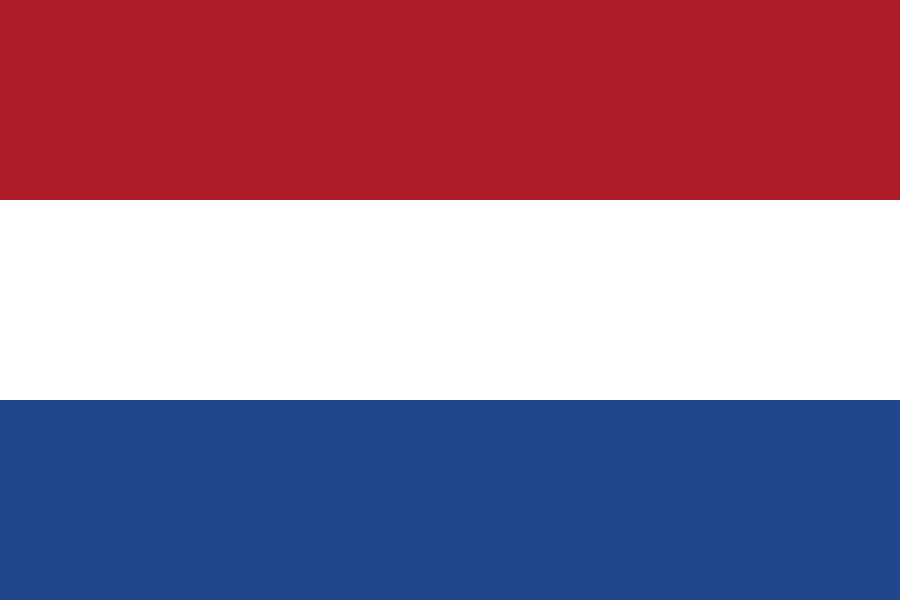
| Netherlands | 636 | Very high | |
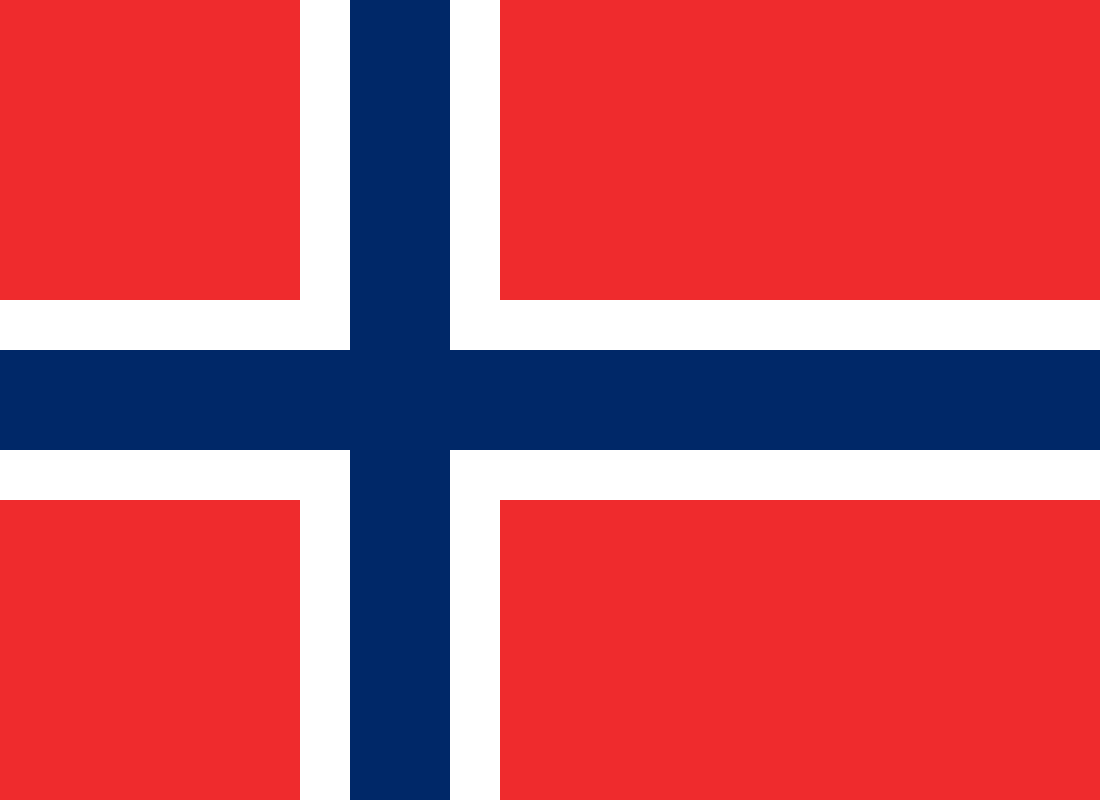
| Norway | 610 | Very high | |
| Singapore | 609 | Very high | |
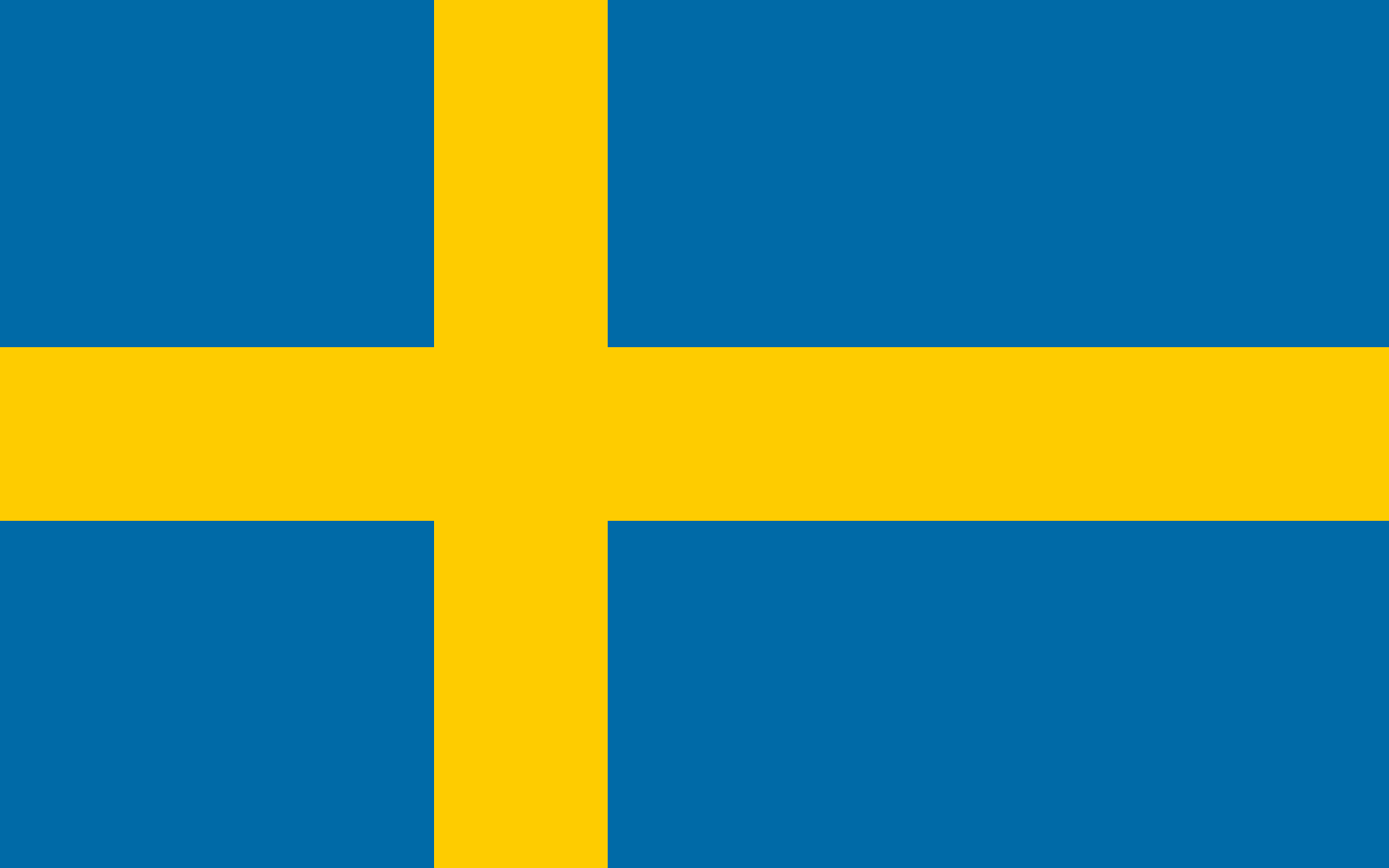
| Sweden | 608 | Very high | |
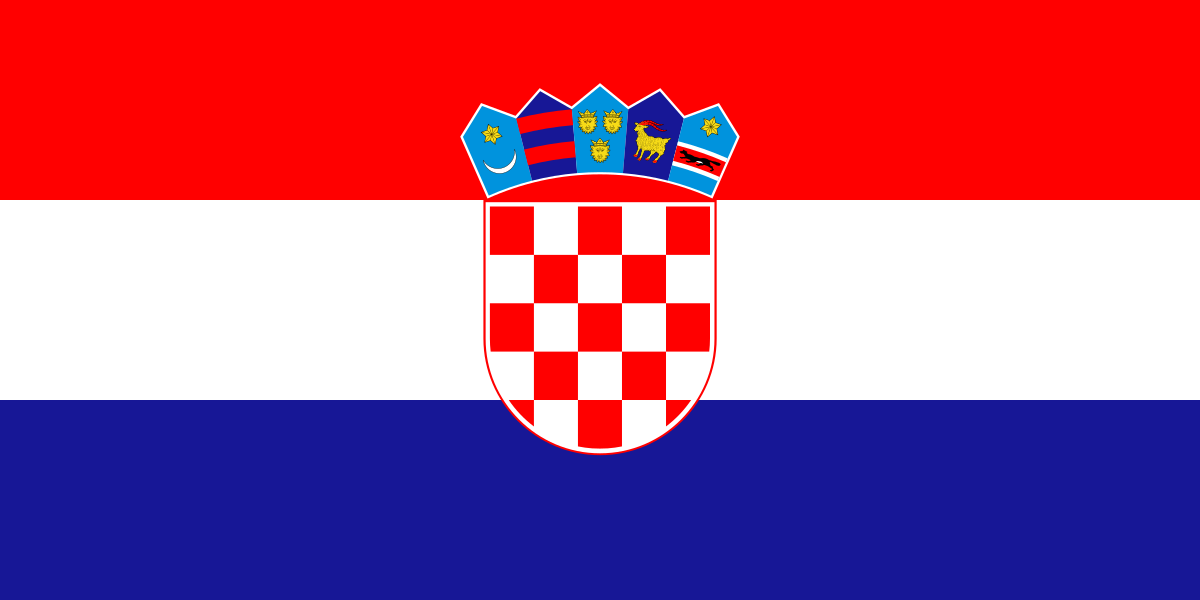
| Croatia | 607 | Very high | |
| Portugal | 605 | Very high | |
| Denmark | 603 | Very high | |
| Greece | 602 | Very high | |
| Austria | 600 | Very high | |
| Germany | 598 | High | |
| South Africa | 594 | High | |
| Romania | 593 | High | |
| Belgium | 592 | High | |
| Finland | 590 | High | |
| Poland | 588 | High | |
| Bulgaria | 586 | High | |
| Hungary | 585 | High | |
| Slovakia | 584 | High | |
| Kenya | 581 | High | |
| Estonia | 578 | High | |
| Luxembourg | 576 | High | |
| Philippines | 570 | High | |
| Lithuania | 569 | High | |
| Serbia | 568 | High | |
| Czechia | 567 | High | |
| Malaysia | 566 | High | |
| Suriname | 566 | High | |
| Argentina | 562 | High | |
| Cyprus | 558 | High | |
| Nigeria | 557 | High | |
| Switzerland | 550 | High | |
| Hong Kong | 549 | Moderate | |
| Honduras | 545 | Moderate | |
| Georgia | 543 | Moderate | |
| Belarus | 539 | Moderate | |
| Spain | 538 | Moderate | |
| Uruguay | 538 | Moderate | |
| Armenia | 537 | Moderate | |
| Moldova | 536 | Moderate | |
| Ukraine | 535 | Moderate | |
| Ghana | 534 | Moderate | |
| Costa Rica | 534 | Moderate | |
| Albania | 533 | Moderate | |
| Russia | 532 | Moderate | |
| Paraguay | 531 | Moderate | |
| Italy | 528 | Moderate | |
| Chile | 525 | Moderate | |
| Bolivia | 525 | Moderate | |
| France | 524 | Moderate | |
| South Korea | 523 | Moderate | |
| Israel | 522 | Moderate | |
| Nepal | 520 | Moderate | |
| Cuba | 520 | Moderate | |
| Peru | 519 | Moderate | |
| Uganda | 518 | Moderate | |
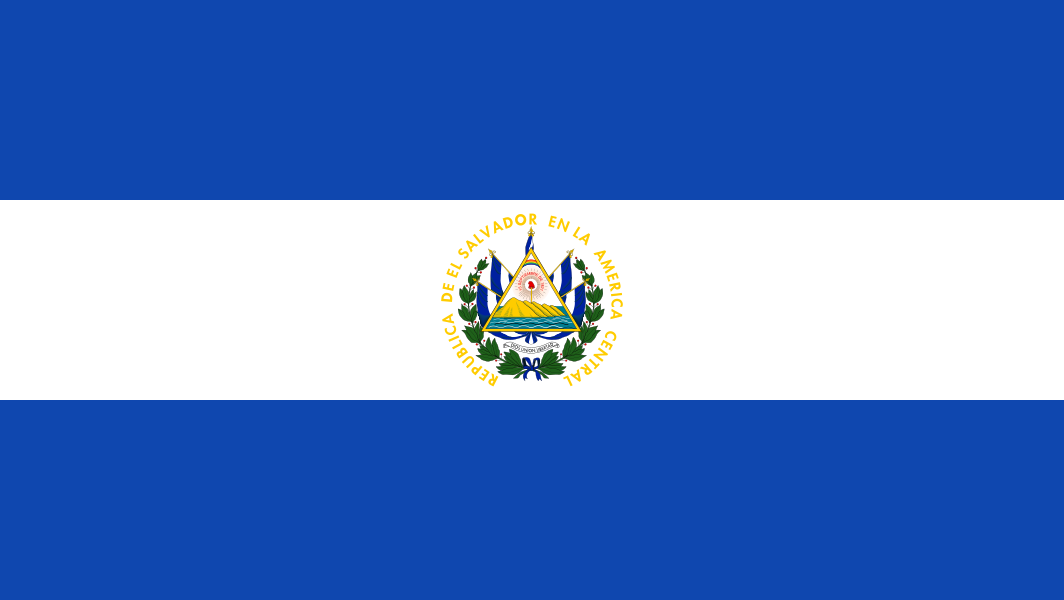
| El Salvador | 513 | Moderate | |
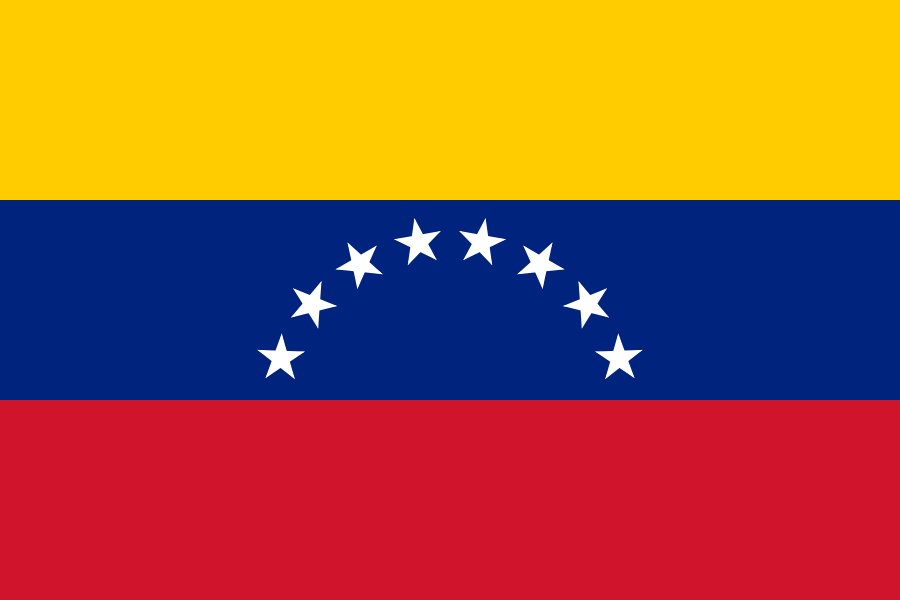
| Venezuela | 510 | Moderate | |
| Guatemala | 507 | Moderate | |
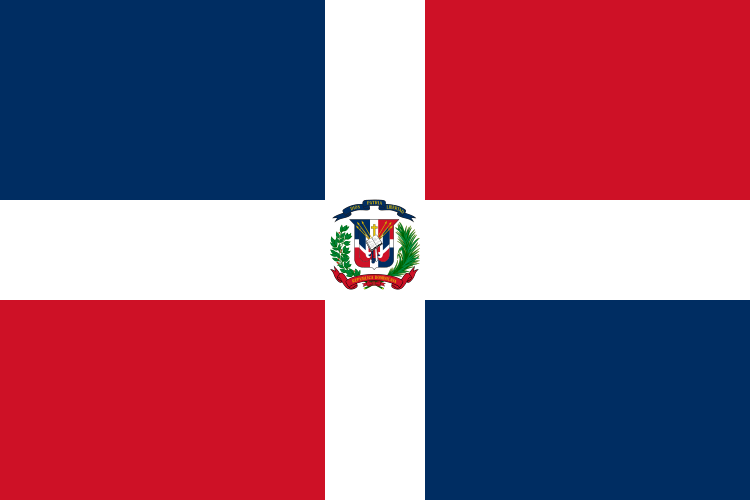
| Dominican Republic | 503 | Moderate | |
| Nicaragua | 502 | Moderate | |
| Bangladesh | 500 | Moderate | |
| Iran | 499 | Low | |
| Ethiopia | 498 | Low | |
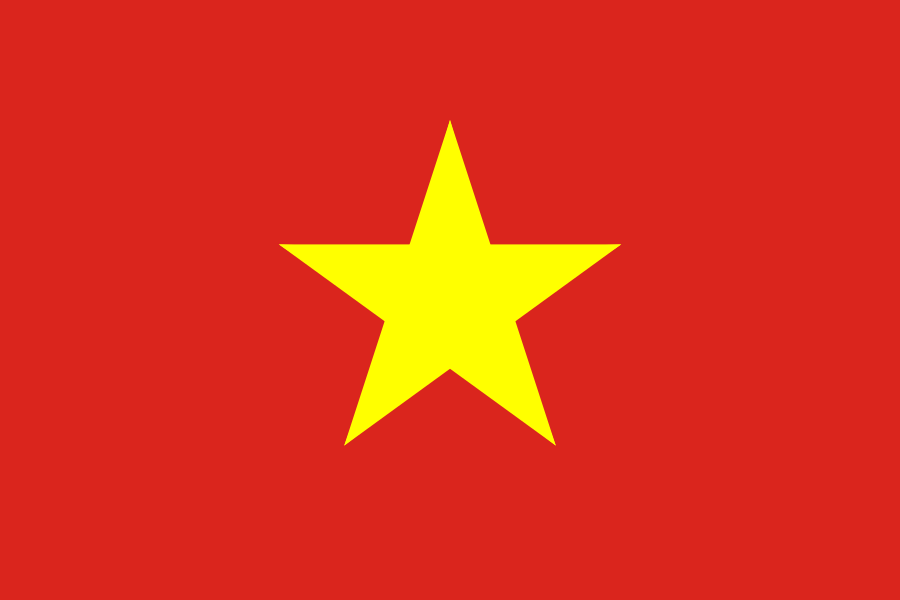
| Vietnam | 498 | Low | |
| Turkey | 497 | Low | |
| Mozambique | 496 | Low | |
| Tunisia | 496 | Low | |
| Pakistan | 493 | Low | |
| Lebanon | 492 | Low | |
| India | 490 | Low | |
| United Arab Emirates | 489 | Low | |
| Panama | 488 | Low | |
| Tanzania | 487 | Low | |
| Sri Lanka | 486 | Low | |
| Colombia | 485 | Low | |
| Qatar | 480 | Low | |
| Morocco | 479 | Low | |
| Syria | 473 | Low | |
| Algeria | 471 | Low | |
| Indonesia | 468 | Low | |
| Brazil | 466 | Low | |
| Egypt | 465 | Low | |
| Ecuador | 465 | Low | |
| Mongolia | 464 | Low | |
| Madagascar | 463 | Low | |
| Azerbaijan | 462 | Low | |
| Mexico | 459 | Low | |
| Kyrgyzstan | 457 | Low | |
| Kuwait | 456 | Low | |
| Cape Verde | 456 | Low | |
| China | 455 | Low | |
| Japan | 454 | Low | |
| Myanmar | 449 | Very low | |
| Palestine | 448 | Very low | |
| Afghanistan | 447 | Very low | |
| Malawi | 447 | Very low | |
| Cameroon | 445 | Very low | |
| Uzbekistan | 439 | Very low | |
| Sudan | 432 | Very low | |
| Haiti | 432 | Very low | |
| Jordan | 431 | Very low | |
| Senegal | 429 | Very low | |
| Kazakhstan | 427 | Very low | |
| Oman | 421 | Very low | |
| Saudi Arabia | 417 | Very low | |
| Thailand | 415 | Very low | |
| Iraq | 414 | Very low | |
| Benin | 413 | Very low | |
| Tajikistan | 412 | Very low | |
| Angola | 409 | Very low | |
| Cambodia | 408 | Very low | |
| Libya | 405 | Very low | |
| Rwanda | 401 | Very low | |
| Ivory Coast | 399 | Very low | |
| Somalia | 399 | Very low | |
| Yemen | 394 | Very low |
- 1月 07 週三 202611:18
一分鐘搞懂英文。 有些英文跟你想的不一樣。汽水沒氣了,千萬別說My soda has no air.

前陣子朋友為了練習英文,有一段時間都跟我message 的時候都用英文,他的想法是,這麼做一來可以複習英文,再者也希望我能當下就糾正他的錯誤,透過這個方式可讓英文進步。
過了好一陣子,發現朋友累績下來的錯誤可以寫個小單元上傳。其中很多錯誤在於中式英文。
中式英文不外乎就是用中文的思維跟字詞直接翻譯成英文,這樣表達很容易犯錯。舉個例子來說。朋友抱怨連假開車回南部時,車子爆胎,竟然直接用explode這個單字,讓人看了驚嚇指數百分百。大家要曉得,爆胎用explode這個字,輪胎是真的爆炸了啊。
還有手機電池快沒電了,對方會用英文說:My cell phone battery is losing electricity.
今天教練整理幾個大家可能常用且常錯的英文,讓你一次學會實用句子,將來就不會犯相同的錯誤了。
我的啤酒/汽水沒氣了
(X) My soda/beer has no bubbles/no air.
(O) My soda/beer is flat.
對,你沒看錯,沒氣了就是flat。如果輪胎爆了,也等於輪胎漏氣或沒氣,一樣用Flat。請看下面的例句:
(X) My tire exploded while I was driving home.
(O) I got a flat tire while I was driving home.
電池沒電,無論甚麼電池,大多用flat 或dead這個字。
(X) My cell phone battery is losing electricity.
(O) My cell phone battery is going flat/is flat.
(O) My cell phone battery is dead. (一點電都不剩的狀態)
Flat 這個字,大家在背單字的時候,通常只會記住「平坦」這個意思,但其實flat除了平坦的意思之外,還有「沒氣」,或是「沒電」的意思。另外,如果表演或生活太過於平淡或乏善可陳,也可以用Flat 這個字。請看例句:
1. I thought her last performance was a bit flat.
2. Life seemed somewhat flat after we moved to the countryside.
另外,flat更有統一/單一或一致的意思,如下:
1. The inn charges a flat rate of NT. 2000 per night/per stay.
2. You only need to pay a flat rate of NT. 100 a month to use all the equipment here in the office.
所以今天學到了flat這個字的多種用法,勤加複習,找機會多使用,以後就不會再講錯了。
- 10月 23 週四 202517:09
有關地球村的英文簡稱知識
RCEP 的中文是區域全面經濟夥伴關係協定。 它是由東協十國發起,並與中國、日本、韓國、澳洲、紐西蘭等國共同簽署的自由貿易協定,旨在削減關稅、促進投資、降低貿易壁壘,是目前全球規模最大的自由貿易區。
主要目標:: 透過削減關稅、降低市場准入門檻、促進貨物和服務貿易、鼓勵投資等方式,建立一個統一的區域市場
- 9月 23 週二 202510:48
How To Use Need In English

How To Use Need In English
“Need” is an interesting verb in English, as it can be used both as a main verb and a modal verb.
For example “I need to get some bread” (main verb) and “We needn’t go now” (modal auxiliary).
Here are some of the ways you can use “need”, with explanations and examples.
- 9月 22 週一 202515:24
would, would和 used to 的關係
would I would 可以用作will 的過去式。例如,在報導句式中(參看 534) 的報導動詞後面就可以用 would. 試比較 'I'll see you again tomorrow.' “明天我還要見你。’ He said he would see me again the next day. 636 他說他第二天還要見我。
would 也可以表示‘在過去的將來時間的概念(亦即談及一個過去的動作,但是在我們說話的當時還未發生)。有關細節,參看 258。 So this was the place where I would work. I did not like its appearance. 那麼這就是我要工作的地方了。可是我不喜歡這地方的外觀。 In Berlin, he first met the woman whom he would one day marry. 在柏林,他第一次遇見那個女人,後來他跟她結了婚。
- 9月 22 週一 202511:50
fairly, quite,rather pretty
與 pretty 205
fairly,quite, rather pretty
232
這四個字很容易混淆。他們都可以用來改變形容詞及副詞的語氣強度(如
fairly nice‘還不錯’, quite nice ‘蠻好的’, rather nice ‘相當好’,pretty good‘相當好”),但他們的語意並不完全相同。
fairly 是四者中語氣最弱的。如果你說某人是fairly nice,或是 fairly
pretty,這種說法並不是十分恭維的話。如果你描述一部影片,說它是f airly good,你的意思很可能是,片子是值得一看但是却不跑一趟長途去看。
個人能把某種語言說得 fairly well,他就能够在日常的話題上成功地與人交談溝通,但是可能無法參與困難的討論。
quite 的語氣比 fairly 稍强。如果你說某部影片是 quite good,你是在推薦它:它不是有史以來最好的影片,但確實的值得一看。一個能把某種語言說得 quite well的人很可能應付得了困難的討論。
rather 的語氣更强;它的意思通常是 more than usual‘比平常更...’或 more than expected ‘比預期中的更...’或甚至是 more than you want
‘比你希望的更...’如果某一部影片是 rather good,它比大多數的影片都好。一個人如果能把某種語言說得 rather well,他的確是精於該語言的人。
如果你說某人是 rather nice,你的語氣聽起來是帶有使你高興的意外心情也許你沒有預期他是那麼好。如果說天氣是 rather hot,你可能覺得有點不好受了。
pretty 語氣與 rather 相似,但大多數用於非正式的體裁。在精確的書面英文中很少用。
我們可以把這四個字看作在一條從 not 到 very 的線上面(不同程度的四點。
not
fairly
quite
rather/pretty
very
nice
nice
nice
nice
nice
不好
還不錯
蠻好的
相當好
十分好
然而要注意,語意可因語調而變。同時,英國人喜歡使用 understatement'
(比事實簡略或輕微的陳述;輕描淡寫的措辭;因此,某男人即使非常愛某一女人,但他很可能把她描述為‘quite nice')。
使用這四個字的更多例子:
He's just written a new book. It's fairly interesting, but certainly not his best.
他剛寫完一本新書。這書還算有趣,但確實並非他最好的一本。
I was quite impressed by her singing - it wasn't bad at all:
對她的演唱我印象深很不錯。
There's something rather strange about the way he talks to you; I don't feel comfortable with him. 他對你講話的方式相當怪;跟他在一起我覺得不舒服。
- 9月 22 週一 202510:49
The fact that
the fact that
231
以 that- 子句作主詞的用法並不普遍。比方說,我們可以說 He was worried that he had no girl-friends ‘他擔心沒有女朋友或The problem was that she was a foreigner ‘問題是她是一個外國人'。但是 That he had no girl-friends worried him a lot ‘他沒有女朋友使他很擔心,或 That she was a foreigner made it more difficult for her to get a job“她是外國人這件事使她更不容易找工作這種說法是很少用(而且是很正式)的。
然而,比較常用的結構是以 The fact+that子句作句子的主詞。
The fact that he had no girl-friends worried him a lot. 他沒有女朋友這件事使他很擔心。
The fact that she was foreign made it difficult for her to get a job. 她是外國人這件事使她更難找到工作。
避免 that- 子句的另一種方式是使用-ing 形式,或使用與‘前導主詞 it'共用的 that- 子句(參看349)。
Having no girl-friends worried him a lot. 沒有女朋友使他很擔心。
It worried him a lot that he had ... 他有...使他很擔心。
有時候我們也必需用 the fact that 來引導受詞子句。當動詞或形容詞後面接一個不可省略的介詞(如 pay attention to, 或 responsible for) 時,受詞子句以 the fact that 來引導。介詞通常不可接連接詞 that,因此必須用 the fact that.
The judge paid no attention to the fact that she had just lost her husband. He held her completely responsible for the fact that her children had been shoplifting. 法官對於她剛失去了丈夫這回事並不關注。他要她對她的孩子們在逛商店時偷竊的事件負完全的責任。
然而。通常動詞或形容詞後面可以不加介詞而直接接that-子句,因此不必使用 the fact.
He insisted that he was innocent. 他堅持說他是無辜的。
I'm aware that you dislike me. 我知道你不喜歡我。
關於介詞後面的連接詞用法更多的資料,參看 490。